In the early days, I studied Classical Greek with four other students: Richard, Oliver, Danny and Kevin. We were all around eleven or twelve years old and it was a high privilege to be tutored by Dr Scales, who almost exclusively taught older students. Before his first lesson with us, we took turns to look out for him walking down from the ‘upper school’ to Cameron House, which housed the youngest day pupils and boarders.
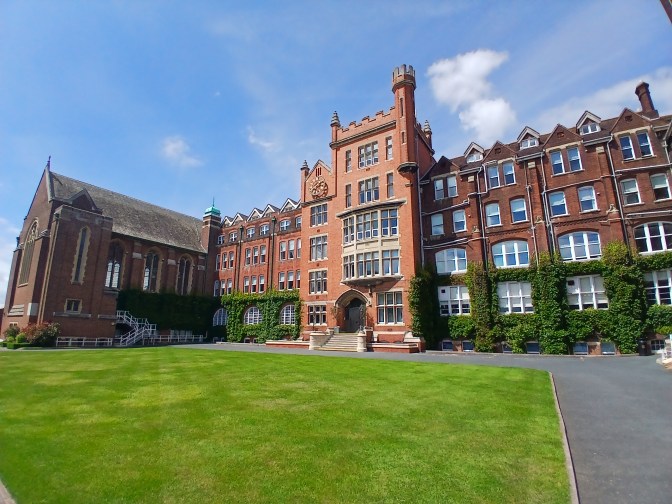
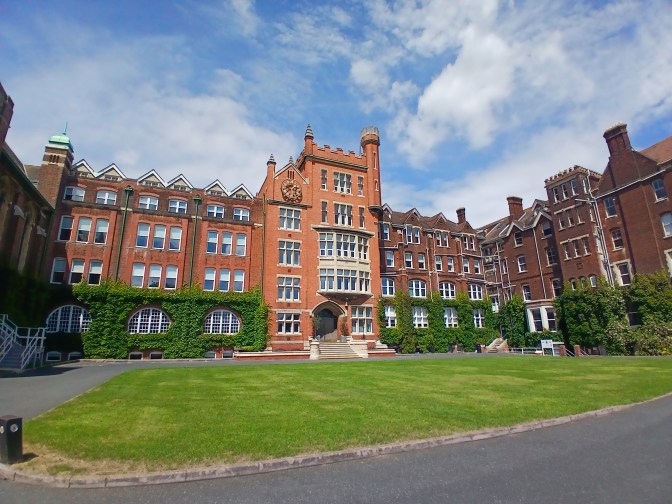
St Lawrence College, Ramsgate
“Look!- He’s floating!” chimed Ollie, whose turn it was at the window. And he was right; the Doctor (as we came to call him) didn’t seem to have any bounce in his gait; rather, he glided sharply in and out of the corridors and classrooms, as though arriving by chariot. We all rushed to get a glimpse- but lost track of him somewhere beyond the Headmaster’s house. Seconds later, the classroom door creaked behind us and in sailed Dr Scales, smartly attired in a three-piece suit, complete with pocket watch and fob. This latter is not an embellishment- he really did own a pocket watch; he later swapped it for a digital Casio, which confused him. He did not have the same problem with Homer, of whose prose he was one of the world’s greatest masters and appreciators.
Dr Derek Alan Scales was a Cambridge trained Classics Master. I first met him in late ’88; I was a skinny ten-year old and felt especially tiny when he supervised my ‘Assisted Place’ test for admission to the local ‘posh’ senior school- the sprawling St Lawrence College site in Ramsgate, Kent. My nearby C of E junior school- the similarly named ‘St Laurence’, until then a metropolis to my young eyes, was suddenly rendered obsolete.
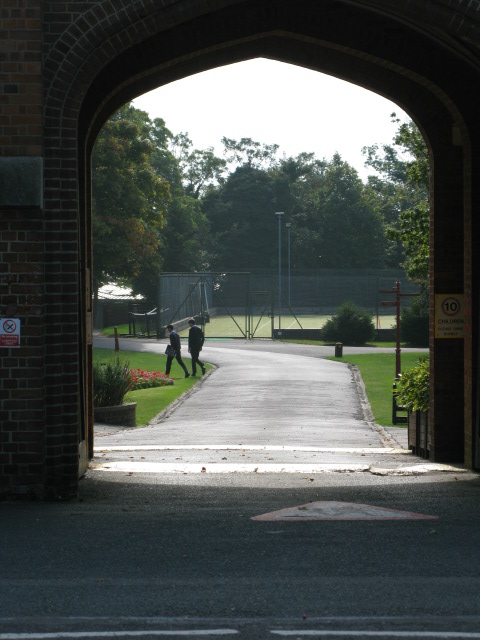
Gateway into St Lawrence College, Ramsgate in Kent
Photo by Nick Smith, CC BY-SA 2.0 https://creativecommons.org/licenses/by-sa/2.0, via Wikimedia Commons
St Lawrence College’s grounds took up ten times the space of any local state school campus. The lower site was situated not far from St Luke’s Church and the town centre, whereas the upper games grounds stretched past Newlands Fields and ended in Dumpton, near to Broadstairs. St Lawrence was a hermit kingdom, and ‘The Assisted Place Scheme’ was the passport I needed for entry; the AP project was initiated by Margaret Thatcher in 1980 to fund private school places for working class children; it represented a huge opportunity for a Pegwell Village boy. Dr Scales was the first teacher to welcome me to St Lawrence and guide me through its foreign lands; he looked after me for seven years, and provided a role model that would be difficult to find today.
Early on, he took us to to see the Elgin Marbles in the British Museum. On the journey up we all took Gameboys, which filled the train carriage with their tinny, electronic music. Dr Scales didn’t mind this a bit; it was fair weather, and he spent most of the journey looking out of the window at the Kentish countryside. At some point, though, he grew curious and joined in with our ‘Tetris’ marathon- possibly as a way to mitigate our growing unruliness. We were all competitive but became borderline psychotic when it came to video games; the biggest cheats were myself and Danny. Kevin, a boarder from the Seychelles, was the quiet genius. Oliver was the coolest kid, and somehow got hold of any new ‘tech’ before anyone else (he was the first to bring the short-lived Atari ‘Lynx’ to school). Richard was the physically strongest child, the best rugby player, and the most honourable; as we neared Victoria Train Station, Dr Scales employed him to separate myself and Danny, who by this point were locked in mortal combat.
This animosity kept up along Oxford Street, but we all became brothers again in the British Museum, when any Gameboy grudges receded upon sight of the Sutton Hoo hoard.
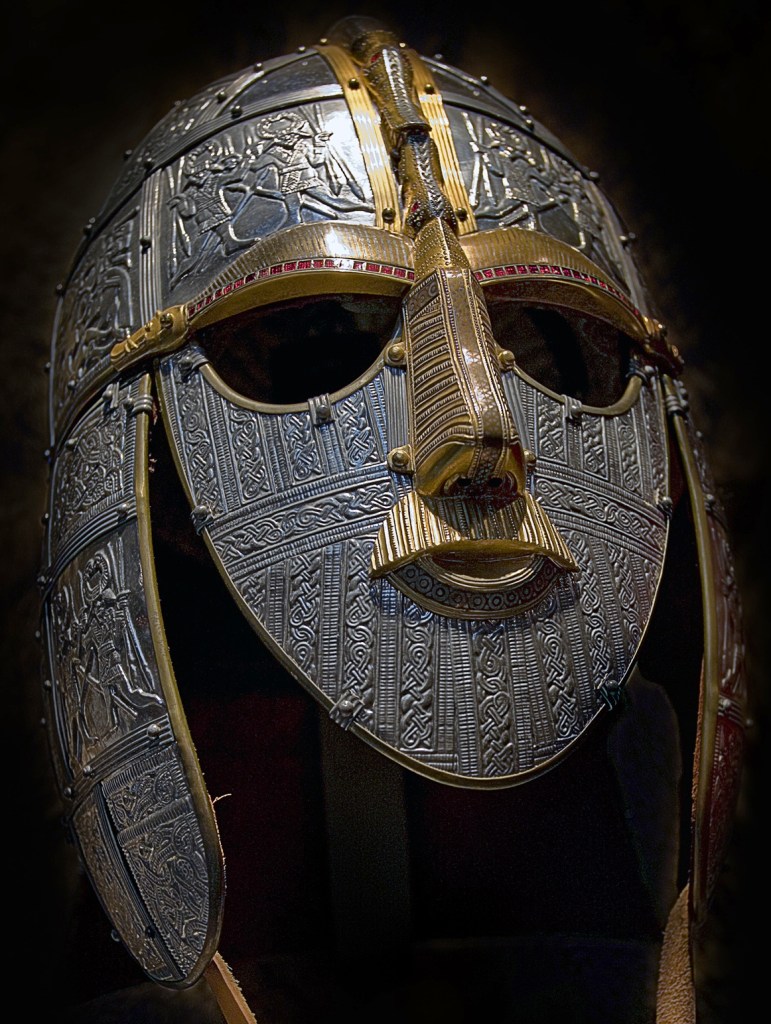
The Sutton Hoo Helmet- the ultimate Gameboy neutraliser…
British Museum, CC BY-SA 2.5 https://creativecommons.org/licenses/by-sa/2.5, via Wikimedia Commons
By the time we reached the ancient Parthenon Sculptures, Danny and I were practically clinging to eachother like mice. The experience removed us completely from our own time; this process of immersion bonded us, and we were completely initiated as apprentices to a classical education. After we’d recovered a little, we directed a volley of questions at Dr Scales, all of which he cheerfully answered, becoming a kind of 1980s Google Gemini all the way throughout the museum, until we got out into London- whereupon he soon became ‘one of the chaps’ again.
A common misconception of private school teachers is that they’re somehow more detached from their state school counterparts, or that a Classics Master must be stuffy and elitist; nothing could be further from the truth. Derek Scales lived on the school grounds with the children, and was completely commited to the holistic welfare of his students. Like the best teachers, he was able to move like a chameleon between youth worker, therapist, adult role model and inspiring subject specialist. One moment, he had you visualising sweeping, ancient civilisations, and in the next- he was eating with you or listening to your problems.
A confirmed bachelor, he had never fully left the innocence of his childhood behind. During that early London trip, he floated to the front of the Oxford Street McDonald’s queue faster than all his young charges put together. Watching the Doctor sit down and negotiate his ‘Big Mac’ meal was a delight for us: much like his ill-advised Casio misadventure, it seemed such a glorious contradiction.
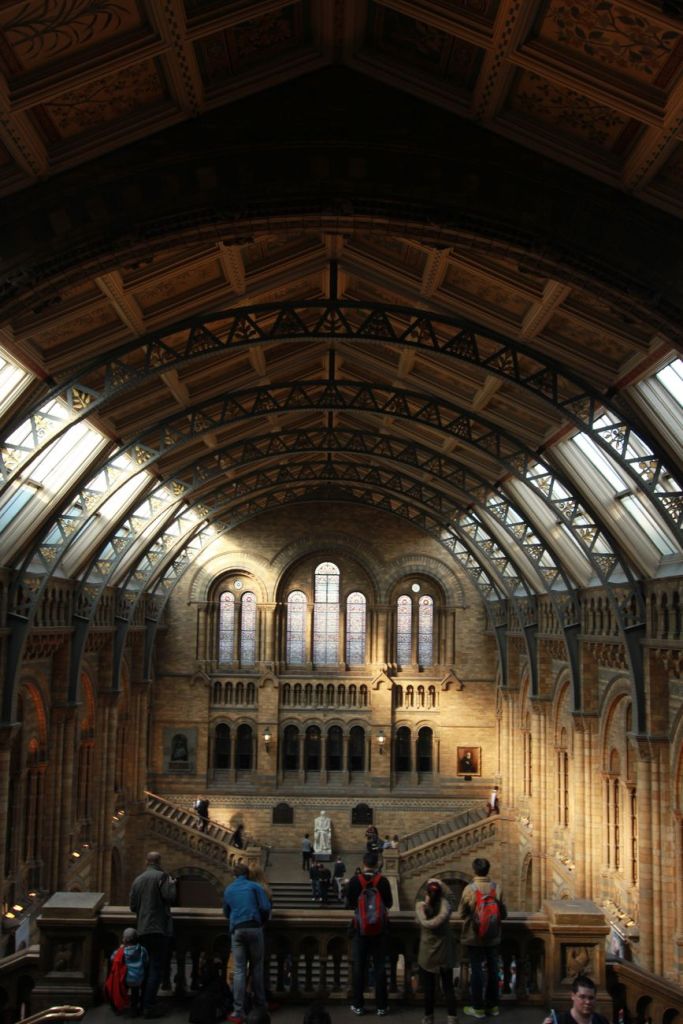
A Trip to the British Museum.
Photo by Christiana Dj on Pexels.com
Later, when there were no seats left on the return train from Victoria, Dr Scales shepherded us straight down to the Guard’s Van- the darkest, rear section of the train where goods and luggage were stored. We arrived with a couple of other errant passengers. The compartment smelled of boot polish and old newspapers- an abrupt departure from the carpet and tobacco scent of the main carriage. There followed a momentary pause, as we adjusted to our new environment and scanned for a perch or nook that might keep us semi-comfortable for the two hour crawl back down to the Kentish Coast.
The first to pounce was the Doctor; clearly a veteran, he stooped down into a crawl space behind some cargo or other. Taking his grey trench coat off, he smoothed it over the splintered floor, lay down with his head propped up against the slam door, and fell asleep. As the train climbed first through the Downs, and later descended into the darkening marshlands, just one rhythm remained constant- the punctual rise and fall of Dr Scales’ waistcoated belly, in tandem with his gentle snoring. The latter only abated come nightfall, when we neared Ramsgate and crossed the viaduct before the main station; the patter of the old train’s clanking diminished, and the Doctor slowly awoke from his slumber. He had famously thick eyebrows, leading to our fondest nickname for him- ‘Mating Caterpillars’. In the dim of the Guard’s Van, his brows were the first part of him to awaken, and we watched, giggling, as he found his bearings.
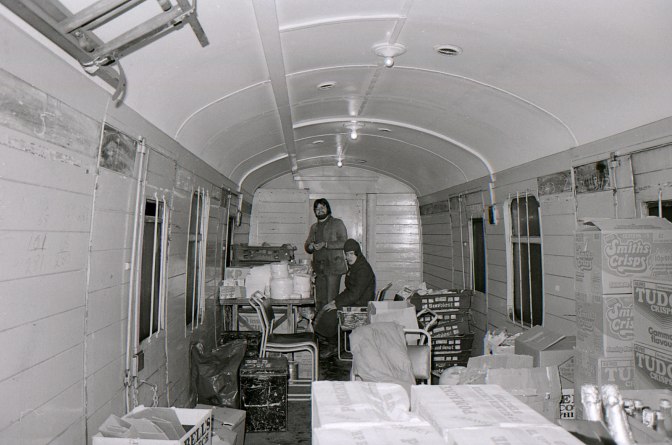
Inside the Guard’s Van. No seats left on the Victoria to Ramsgate train, so we competed with strangers, for comfort amongst the cargo…
Photo Credit: Richard Sutcliffe, CC BY-SA 2.0 https://creativecommons.org/licenses/by-sa/2.0, via Wikimedia Commons
Such trivialities evaporated in the coming weeks, as we were reminded that he was, in fact, a modern day Titan- capable of conversing and perhaps even thinking in Classical Greek. He was bashful about it, although when pressed he admitted to a habit of chatting in Homer’s Greek with fellow undergraduates, back in his Cambridge days.
Soon after the London trip, we settled into a four times weekly schedule of Ancient Greek language drilling. Not long into the regimen, our first Herculean challenge materialised: to memorize the Greek alphabet. Dr Scales would time us on his pocket watch- if we could get all the way from Alpha to Omega in under five seconds, then we’d get a prize. With such a short timespan, there could be no stuttering or faltering; in this regard, our nerves were highly assisted- because upon immediate completion, our trophy was none other than a ‘King Sized Mars Bar’. To an eleven year old back in 1989/90, this was a prize commensurate to the Golden Fleece- because back then, Mars Bars simply ‘weren’t playing’. Even a regular Mars of yesteryear was many leagues more muscular than its elverish, modern counterpart. I suppose the best analogy would be to compare the King Sized Mars Bar to a mobile phone from back then; both were fundamentally ‘bricks’.
After much spluttering and stammering, we honed our Hellenics to a fine enough point to each earn our slab of chocolate- and more importantly- the affirmatory nod of the Doctor, as he timed us home. That was and always will be the mark of a motivated (and dare I say it ‘human’) teacher: the joy at witnessing your student surmount their first major hurdle. Time stood still when you got something right in Dr Scales’ lessons; no AI droid in the world will ever match the mutual joy experienced when a student and their teacher’s eyes light up at each new ‘lightbulb’ moment…
… Or ‘Eureka’ moment, in Derek Scales’ case… It’s a testament to him that even now, over three decades since my last lesson with the Doctor, I can still identify ‘Eureka’ as a present perfect tense verb (famously meaning ‘I have discovered!’). Really though, we should all be saying ‘Heureka’, because it was pronounced with an ‘H’ sound in the original Greek. They didn’t have an alphabetical character for ‘H’. Instead you’d place a ‘rough breathing’ (an inverted apostrophe) on the first vowel in the word, or the second, in the case of a dipthong (two vowels at once)- hence it’s: εὕρηκα.
It may sound difficult but this was first year stuff, which we scoffed down with our giant Mars Bars. If taught properly, Classical Greek isn’t all that hard to master; no single part is too complex. It’s just that there are a lot of parts- if it were a Lego set, it would be the ‘Death Star’. And for this reason, I believe more schools should offer it. Children adore Lego, and they love huge, strange, shadowy structures. When I recently introduced the subject to a class of mine, they were fascinated by the direct link to a mysterious, long lost master culture, and the compelling lustre of its ‘secret code’ alphabet.
Another brick (although not as easily devoured as a Mars) was our course reader for the next few years- ‘Greek for Beginners’ by L.A. Wilding.
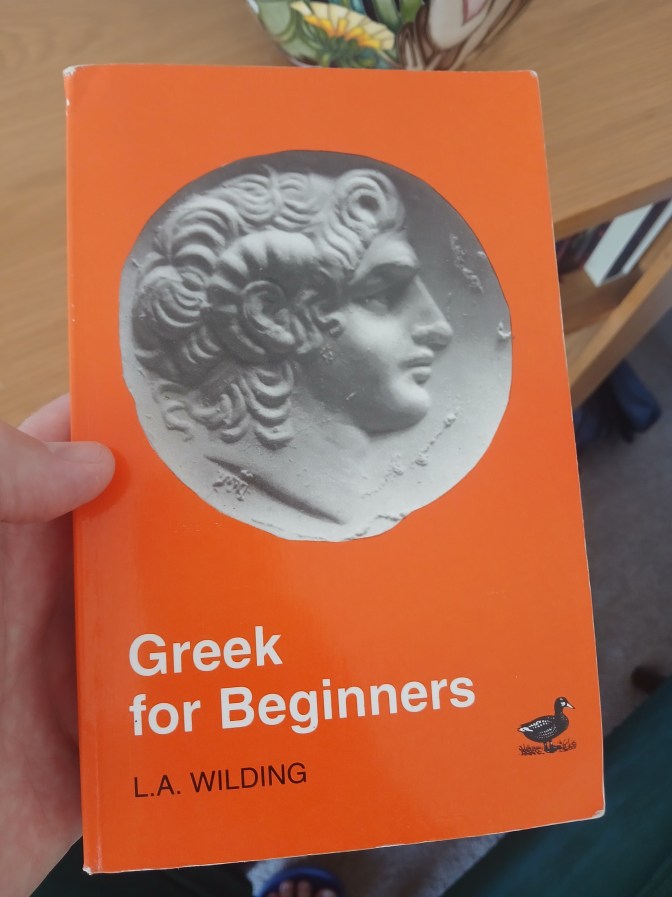
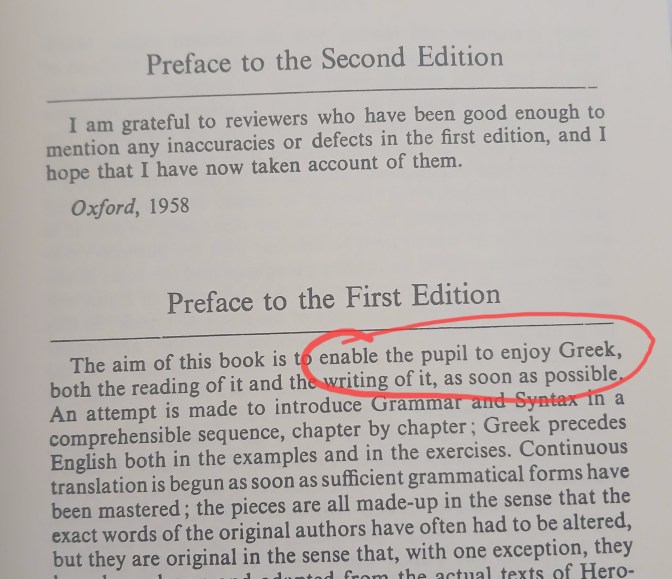
One of Dr Scales’ most repeated utterances was ‘Open up your Wilding’. This was delivered among many a hearty ‘my boy’ and occasionally, a sharp rebuke if we were overdoing the clowning; the Doctor was a benign Titan, but a Titan nonetheless: he was one of the kindest men I ever knew, but he was also strong and set boundaries. I wouldn’t have dreamed of being late to one of his lessons, or doing what my classmate Danny did one day, which was to hold his middle finger up to me, albeit keeping his offending hand close to his face- so as to conceal his crime. I was plotting retaliation, but the Doctor had seen the gesture and administered justice on the spot.
Danny received a Zeus-Level rollicking and sat chastened for the remainder of our lesson in ‘C1’. This stood for ‘Classroom One’ in the Main Classroom Block; it was the first room down from Jean’s Tuck Shop and served as Dr Scales’ chief lair of antiquities. After we got older and left Cameron House, this is where we took all of our Greek lessons; by this point, the group had reduced to just myself and Danny.
Dear old Jean retired not so long afterwards, and the tuckshop moved away from the main classroom block. But the scent of the old stores lingered, and waiting outside C1 in the subsequent years, you’d sometimes still catch a whiff of West Indian Limes (my favourite) or Cola Cubes. Often this was accentuated by the Doctor’s sweet-tooth; he’d frequently bring candy into class with him. But these scents soon gave way to the deep, autumnal aroma of Classroom Number One. For as well as being the first room in the block, it also housed the oldest desks, cupboards and books. For an antiquarian like Dr Scales, and for us too, his very dedicated apprentices- C1 was a sensory paradise.
In the first instance, there was the quintessential bouquet of seasoned academia: ancient oak desks, used by generations of Old Lawrentians, dating back to at least the early 1900s, coupled with rich mahogany and glass cupboards. All the wood was soaked once a year in a varnish which smelled of linseed oil and turpentine, and nothing was ever, ever replaced. Culturally, it fostered a sense of firm foundations and a spirit of ‘carrying on’. From a trite, financial perspective, the decor was also a canny adjunct to all those red bricks and ivy; it sent the message to parents of prospective pupils: “You’ve arrived”.
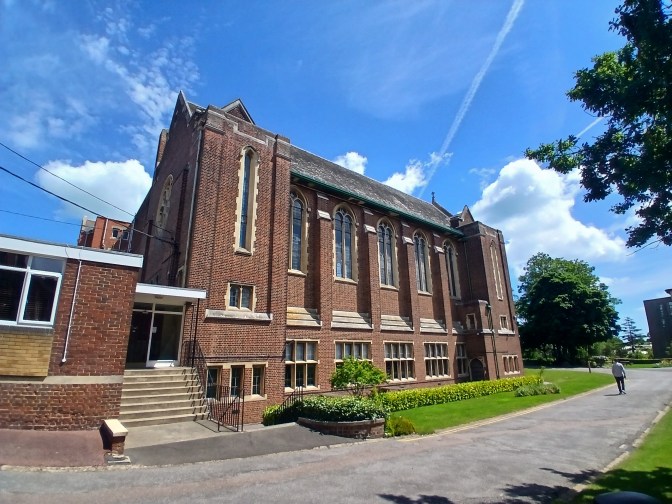
The Chapel at St Lawrence College, as seen from C1.
But for myself and Danny, it bred a sense of déjà vu and half-imagined conversations with boys from yesteryear, about whose lives and aspirations we often speculated. In this regard, we were most helped by our vintage desks, around which we moved freely, from lesson to lesson. These old workstations contained hundreds of old wood-etchings, or ‘table tatoos’, from long ago students, and I mean hundreds in the literal sense: Initials, aged signatures, low humour, high humour (a few painstakingly carved in Ancient Greek or Latin) and rarely- a lament. Sometimes, you’d come across a sketch- the most ubiqitous of which was a ‘Mr Chad’, aka ‘Kilroy Was Here’: the little chap with his nose and hands hanging over a wall; in our part of Kent, he was called ‘Herman the German’.
The desktops’ yearly polish and buff made most of the more mature inscriptions indecipherable, but they were still there; if you were tired and ‘switched off’ from the work, it was possible to angle and squint your eyes so they might trace some fragments of the more enigmatic engravings. We found some wartime ‘Wot No’ scribbles- ration complaints like ‘Wot No Sugar!’ etc, but the very oldest markings were invisible most of the time, hidden under a web of subsequent memes and banter.
The most ancient tables were situated along the left of the class, next to the window; these remained mute for most of the year, when all but the surface scribbles could be viewed. Then in late winter, a stunning natural séance would occur at dusk. The last light of the day would creep low across the schoolyard until it hit the classroom block, where it would illuminate each chamber in a row, ending down at Classroom One. Just before darkness fell, the sun’s final, most essential rays poured in through C1’s windows and a cascade of beams lit up those oldest desks.
By the time your eyes got over the initial blinding, you’d find the palimpsest of surface-level impressions had evaporated. For a few cloistered moments you could detect the very earliest incisions, left by the oldest of all Lawrentians- those boys being readied for the first war, or perhaps for a life in the Raj. But as with many of their scribes, the light passed only too quickly over the messages, and they vanished almost as soon as they appeared. Over the years, I revelled in this annual communion- but struggled to comprehend much beyond initials and dates. Of all the original carvings, I can only remember reading one full sentence. It was a question, that asked simply: ‘When can I leave?’
Danny and I left that room over thirty years ago. We both took Classical Greek as far as GCSE level. After all those lessons with the Doctor, the exams felt like a quiz. We both achieved A* grades and later I wished I’d taken Greek for ‘A’ Level, instead of Latin- which always seemed like less of a secret to me.
The desk-lament ‘When can I leave?’ haunts me a little. And maybe it did the doctor, too. I left university and started teaching at twenty-three, before leaving to work with disadvantaged children; I came back to the profession in my late twenties and have remained there ever since. I’m forty-eight now and all but a few years of my conscious life have been lived outside of the school system. The same applied to the Doctor, whom after all these years I still lionise, and to whom I’m dedicating this entry. I last saw him when I was eighteen years old, and he was fifty.
Doctor Scales died late last cold season. That’s the same time of year our old classroom would be lit up by those final winter sunbeams. Not so long after his passing, I walked through Pegwell Village and spotted a white squirrel. Almost universally in early human culture, from the Anglo-Saxons to the Navajos, an albino animal signified that change was coming, and that you should ready yourself for it.
I teach secondary English. Last year, some students at my school expressed an interest in Ancient Greek mythology. I told them about the Doctor and my time with him. The class was hooked. I ended up buying an old copy of Wilding, and have since coached a cohort for the School Olympus Challenge, via the national ‘Classics for All’ programme. The project was set up because very few children now take Classical Greek, or know much about the world before ours: the time of the old gods, and of Odysseus…
… Fewer still know about Dr Scales. But perhaps I can change that a little.
They stopped selling King Sized Mars Bars in the last century; I can’t float and I don’t own a waist-coat, much less a pocket watch.
But I can still say the Greek alphabet in under five seconds. And it makes me smile when my students can.
Just like the Doctor once smiled, a long time ago.
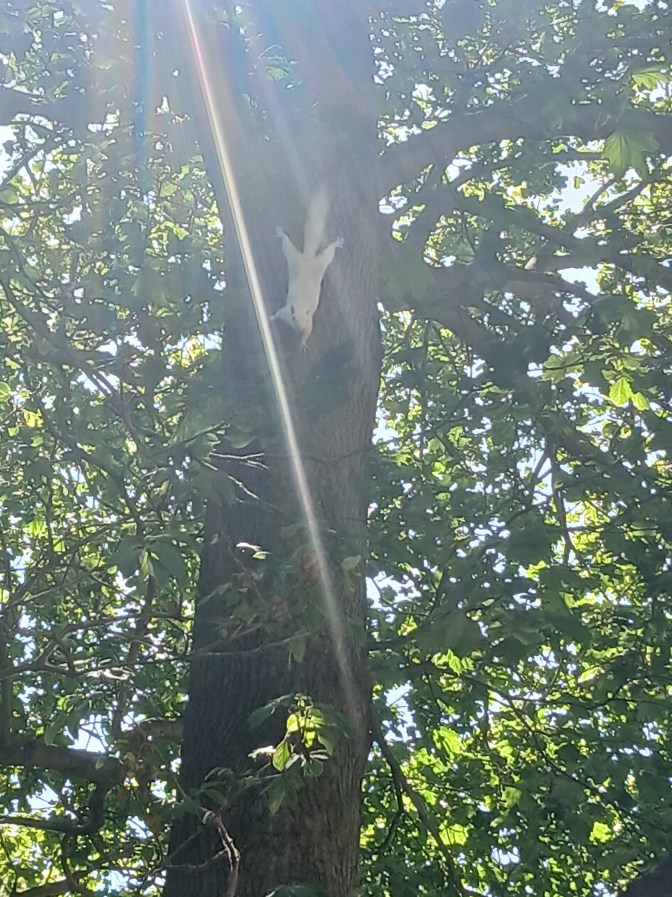
The Pegwell Messenger


Postcards: What a wonderful piece of writing Gareth. Dr Scales description is simply wonderful, and so very true. He was a excellent teacher. Never to be forgotten.
You too , have taken your career forwards and are now showing everyone the importance of the ” Classics”. Your students will relate to this in years to come.
Well done, and I look forward to reading more. You have a refreshing style of writing which allows the reader to be with you in that moment.
LikeLiked by 1 person
Hello Jackie!
I’m so glad you liked it.
Yes, Dr Scales was a lovely man; we all knew what a privilege it was.
Getting the old Greek textbooks out again has been a revelation… I might even see about pursuing some further study in it… Could be a good form of brain therapy, what with the epilepsy?
Tea before France! See you soon and give my highest regards to Jamie,
Love, Gazza x
LikeLike