I broke up from school for seventeen days yesterday. Afterwards, I drove to Pegwell Village and parked a few yards up from the Belle Vue Tavern, where Queen Victoria used to eat scones in the summertime. I then walked a few yards away from the main road and disappeared into one of Kent’s darkest trails.
As children, we called it the ‘Dark Alley’ but it goes by several other names. The sign outside the coastal entrance used to read ‘Smuggler’s Alley’; it starts about a hundred yards up from the sea, and is directly parallel to a smugglers’ tunnel that comes out of the cliffs near the pub. But today the sign reads ‘Public Footpath’, although you’ll find no evidence that anybody has walked this way for years. I’ve also heard it referred to as ‘The Long Stretch’ and ‘The Nuns’ Path’.
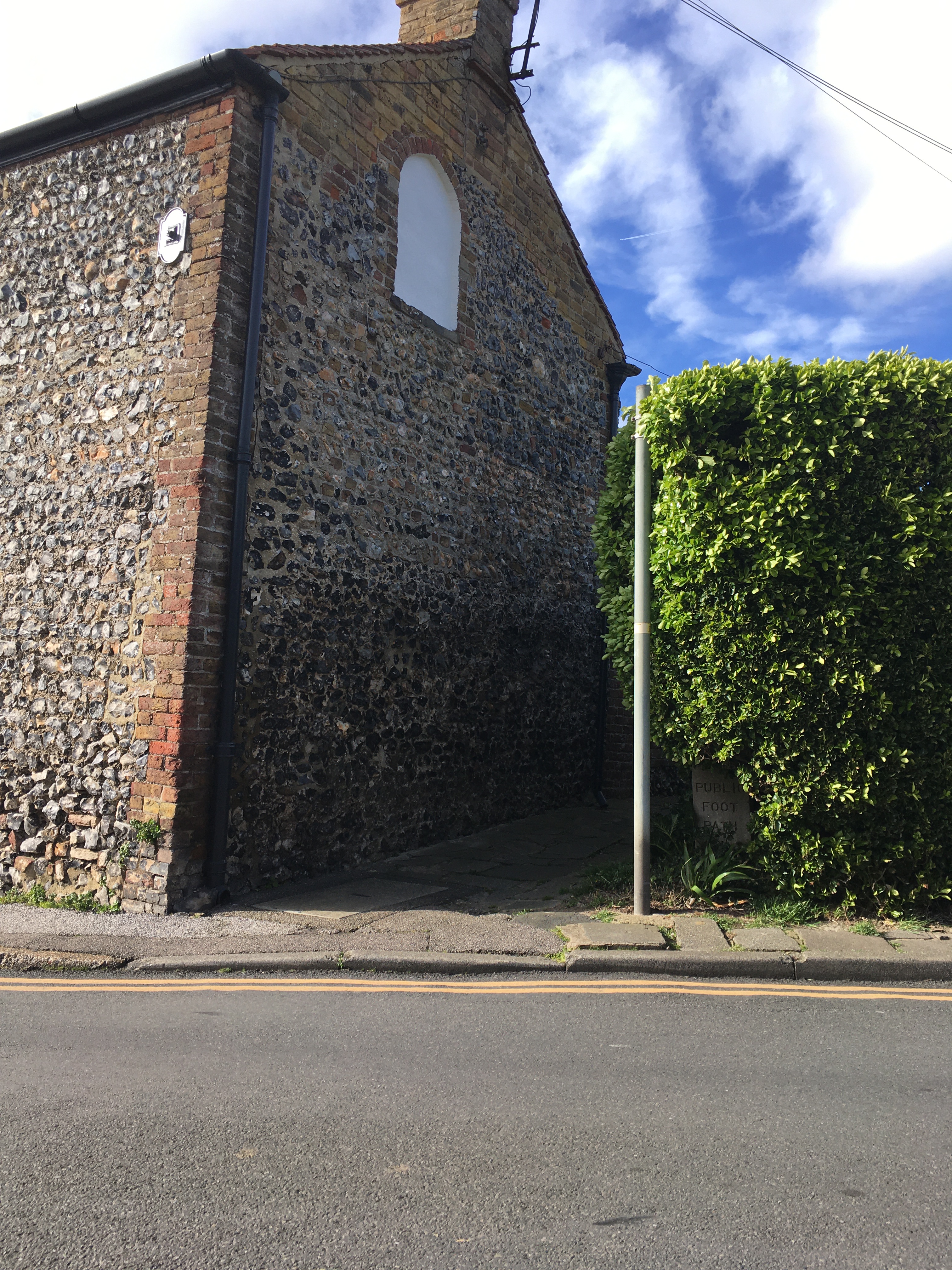


At first, I managed to get less than half way before retreating to the Belle Vue Tavern for a Coca-Cola and a packet of Scampi Fries. I often return to childhood favourites when I’m frightened. And frightened I had been.
I’m nearly 46 years old and it’s been over 35 years since I first entered the Dark Alley. Back then, every Pegwell kid ‘passed through’ before the age of 13. It was the holiest of all our summer rituals- and we had many. The test was always completed on a BMX; every child in the village owned one of the latter and like the alleyway itself, our bikes were an indispensible part of the bridge between early childhood and adolescence.
Presently, I took my coke and fries into the Belle Vue beer garden. The view here is unspoilt and just as a young Victoria would have enjoyed it in the 1800s.

I can’t say the same for the rest of Pegwell. In the last three and half decades, so much of it has been torn up, I hadn’t even been sure if the old pathway still constituted an actual ‘alleyway’ any more. Nor if its essential darkness had survived into my adulthood. I’ve taken a screenshot from Google Earth and edited it below:

The alley can be seen clearly on the map: it’s the long grey, nameless line stretching between the two red ‘X’s. To the northwest of the alley are three brown ‘W’s (for woods); these represent a large, long-dead coppice that was very much still alive when I was a child. The large green square marks the outer limits of where the Convent of the Assumption used to sit, until it was torn down in the 1970s.
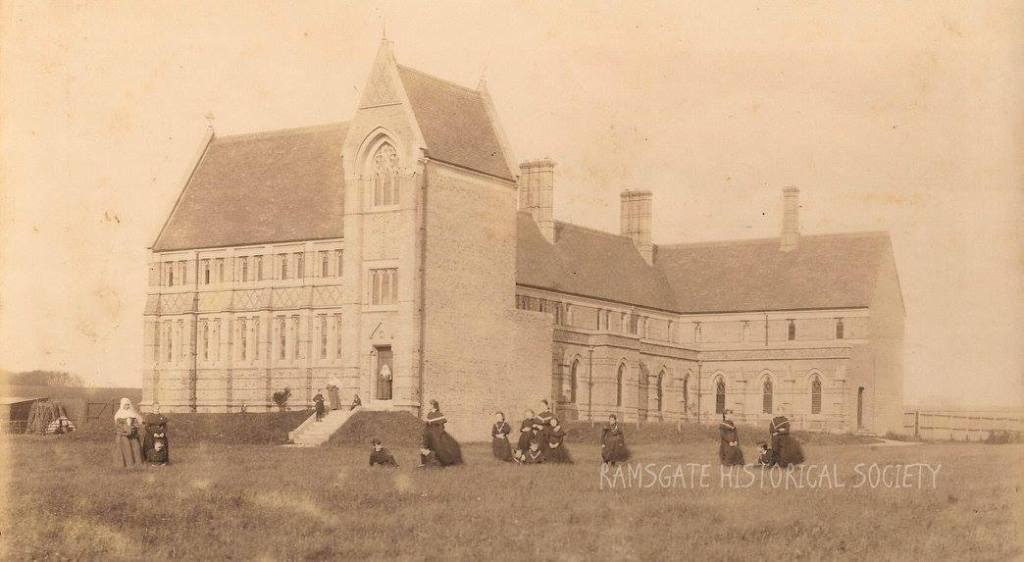
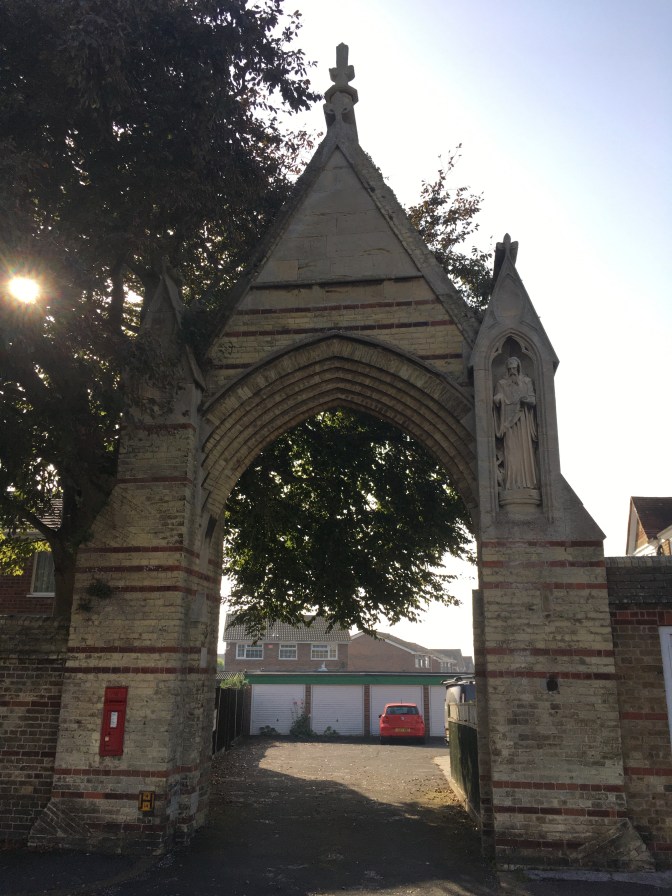
The outer walls of the old convent remain and are now the front walls for the houses that sit around my green lines. They also form most of the high back garden walls that adjoin the Dark Alley. It’s illegal to damage them. And who would want to? The builders of the new estate clearly had some taste. Either that or they respected the saints of old: they also left the main convent entrance in situ, about forty yards up the hill from where I grew up:
The Dark Alley is still very much a viable pathway; before I aborted my first attempt yesterday, I’d walked as far as the old Convent walls- until I could see a distant orb of light that constitutes the far end: the exit at Downs Road, where I grew up.
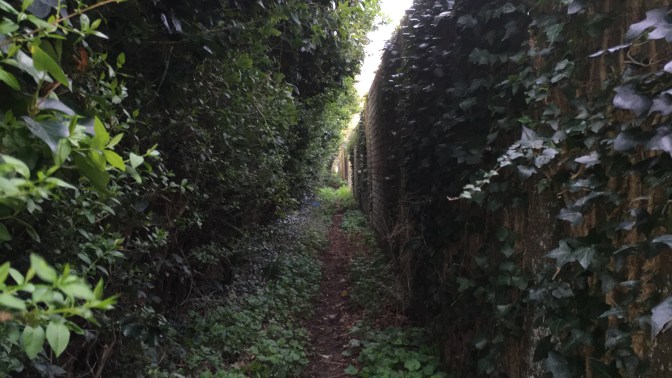
The track itself survives in its entirety, and as I all too readily discovered- it still reeks of prepubescent fear. At this time of the year, you can add the aroma of wild leek and spring fox-den, as well as the emerging bouqets of a thousand different wildflowers. But I found very little evidence of human-laid detritus: just one very old whisky bottle. No empty cans of beer or energy drinks. No ring pulls. No cigarette butts. Nothing. It seems not even the itinerant come here any more. Now, this is something that differs from my day, back when the alley was often walked and at times even inhabited.
I was halfway though my Coca-Cola when I remembered the ‘Knife Man’. He stayed intermittently in the coppice that lay on the northeast side of the alley. The woods were readily accessible some forty yards ‘in’ from the Downs Road entrance; you could climb through one of old fences and scale down to them. The first firm(ish) ground sat ten or fifteen feet lower than the alleyway itself. It became deeper the further you walked in. The coppice measured just two or three acres in size but the foliage was so dense that you could only see ten yards in any direction, giving it the feel of a vast forest. Overhead, the branches of ancient alders, birches and elms entwined, ensuring a sepia-clad existence for the families of jays and foxes that made this their home; even at midday in late July, a blue summer sky became a distant dream.

The ground beneath you had to be watched like a hawk; the leaves from each successive autumn never fully cleared and many boys sank above their waists. I say ‘boys’ a little too readily; a girl cousin of mine also used to come out with us- and she could more than handle her own against us army of lads; my dad taught her how to box and she once bested an Uncle of ours. But that was useless against the ocean of leaves one sometimes encountered in the old coppice. A calm, crunchy swim was the only way out; if you flailed, you remained or sank deeper.
Into this natural mattress entered and slept the ‘Knife Man’. He stayed here for two summers that I can remember. Each August, during our school holidays, he’d come up into the alley and walk Pegwell. No matter now hot it was, he wore a dark, thick camel coat. His hair was black as boot polish and for a man in his 50s, he had plenty of it- more than I do now in my mid-40s. His cheekbones were high, skeletal and covered in black stubble- unusual for a time when virtually every adult male was cleanshaven. Today, he’d fit right in.
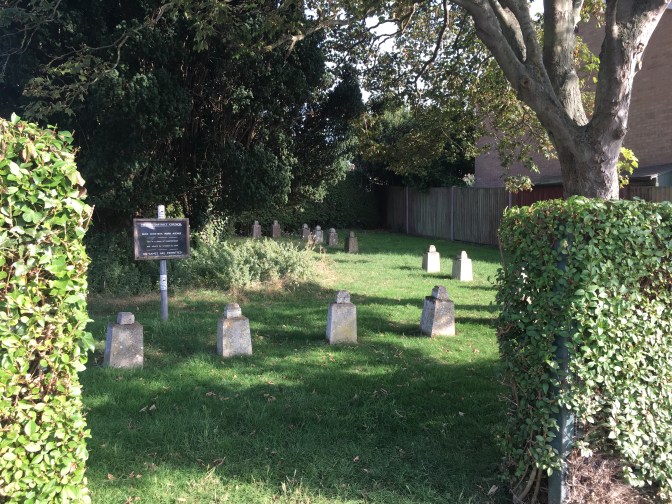
All of the children would be playing football on ‘the field’- a spare, green area situated next to the Nun’s Cemetery- when we’d hear the shouting:
‘Knives, Sharpen your Knives!’
Not all the children would follow him; he never looked at us but would take his sharpening stone and strike it very hard across a lamp post- sending sparks flying everywhere. Very few Pegwell residents hired him but those who did received a good service. I only saw one woman employ the ‘Knife Man’, towards the top of Mark Avenue. She brought her kitchen knives out onto the front lawn and the man went to work, drawing a small crowd as he did. The women cooed and the men murmured; I caught the odd ‘Knows what he’s doing’ and ‘Harmless, innie, really?’ I don’t know about that last statement, though. I once got close enough to see inside his jacket; it was laden with knives, chief among which was a spectacular curved dagger that resembed a Gurkha’s Kukri.
I don’t know what happened to the Knife Man, and before yesterday I hadn’t thought about him in many years, perhaps decades even. I spoke to my father about him last night and he speculated that the man was a gypsy, outcast by his family and doomed to wander alone. I don’t think I’ve ever met a more solitary creature, within either the human or the animal kingdom. Well, there was perhaps one. But it took a few more Scampi Fries before I was ready to readmit him to my memories.
The boy was older than us- a man really, perhaps of seventeen or eighteen years. Looking back, he was a victim. But all we saw were the drugs. In those days, there were two routes available to the seaside drug-addict: heroin or glue, as far as we knew anyway. Occasionally, we’d find a needle in one of the Victorian promenade shelters on the front. But we never saw the users. With glue, it was different. The man in question would fill a Tesco bag with solvents, stand around one of our gang’s many landmarks, and then inhale to high heaven. The bag would cover his nostrils and his mouth; he could breathe in for a very loud, long time, emitting a sound like a hot air balloon filling up. Eventually, his hands hands would tremble and his eyes would turn black and roll back into their sockets. Only then would the bag drop- and him with it. He would lay prostrate like this for hours, and that’s mainly how we found him- but occasionally we also witnessed the inhaling ceremony.
Finding the neighbourhood glue sniffer was scary enough, but one of our lads managed to go one better and find him overdosing in middle of the Dark Alley. He was younger than the rest of us and it was his first time ‘going in’. Being an initiation, we saw him off then waited at the other end. By road, it took a minute to BMX this distance. The alley took more like seven minutes. It took our friend a full half hour and when he finally emerged, he looked a very different child to the one who entered it. His way had been blocked by the glue-sniffer, but the boy hadn’t wanted to turn back- such was the importance he attached to his early test; instead he spent an excruciating twenty minutes or so waiting the man out, before being able to cycle past and through to the other end of the alley.
Back in the Belle Vue beer garden, I finished my coke and folded my empty Scampi Fries packet into a bow. It was half-past four and the skies had turned spring blue. Beyond the bay, the Channel reflected and stretched out toward the faintest white lines of France. The vernal equinox was just two days away. I left the pub and walked the alley from one end to the other.
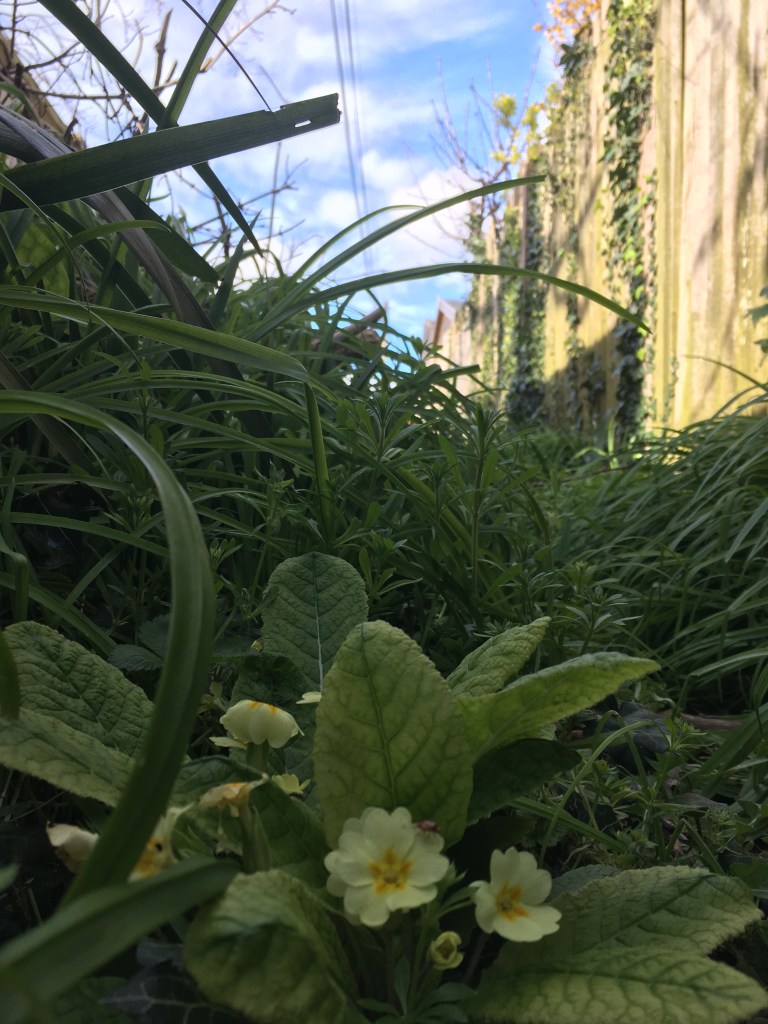
On the way out, it was scary- but only in places, and perhaps accentuated by the Coca-Cola. The return journey was nicer. I stopped a few yards in to look where the old coppice entrance lay, and saw a football caught in what’s left of the woods; it could well be one of ours. Not many children have lived in Pegwell since we grew up. Not that you see, in any case. When I was young, we used to spend our entire summers outdoors- even a bookworm like me left the house before nine and didn’t return until sundown.

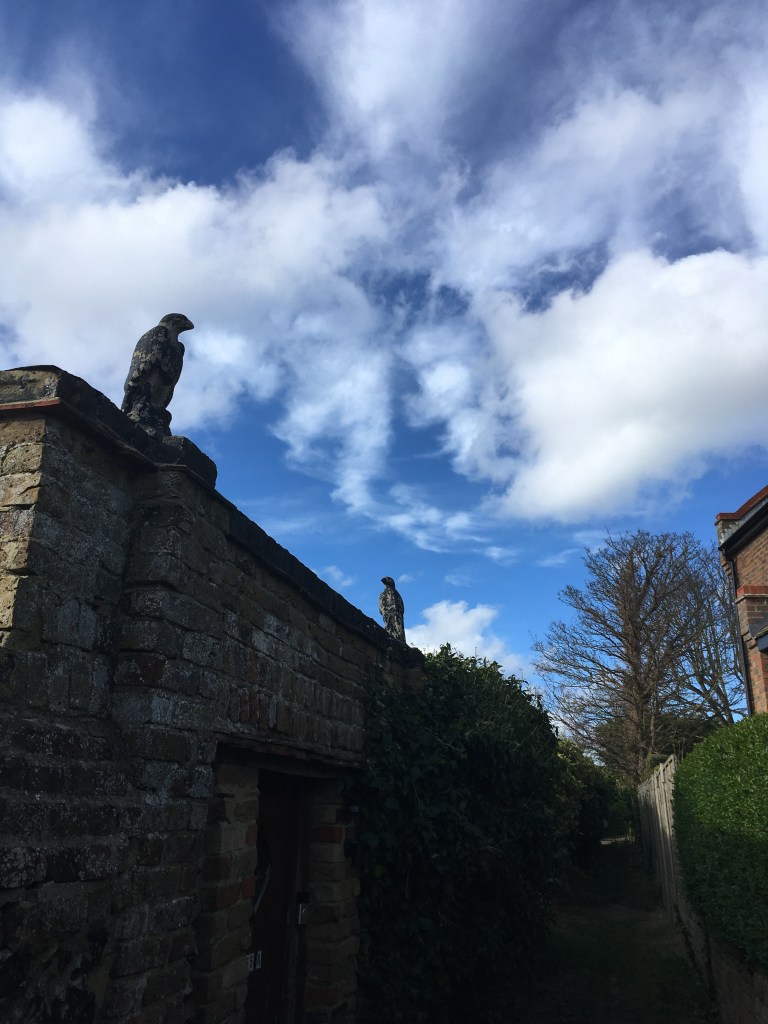
All that remains of the coppice is a ten-foot wide strip of tangled, srcunched up brush- it runs for a few hundred feet or so, and is sandwiched between the alley and the new gated estate they built once the woods were felled. As I stared beyond the football, I received my final memory for the day: the Anderson Shelter. It couldn’t have lain far from this part of the alley. We found it towards the end of one summer, when I was thirteen years old. We knew what it was, from our school history lessons. In the 80s, bits of the last war still lay out in the open; there was a functional air raid siren just opposite our house on Downs Road. Occasionally, a man would come out and test it. Suffice to say it worked and was very loud. It was one of our meeting places; although I never considered it as a child, I now know the reason for testing it was in case of a third war. I can still remember it being there just a few years ago, but it’s gone now. So is the Anderson Shelter, which was unusual in that two thirds of it was dug underneath the Dark Alley itself. The final third of its corrugated iron roof curved down into the coppice and was covered in the usual barricade of brown leaves and gnarled oak branches. Inside, we found old tea making kit and a selection of newspapers from the war. We all promised each other we’d go back the next summer.
We never did- and now the only place it exists is in our minds.

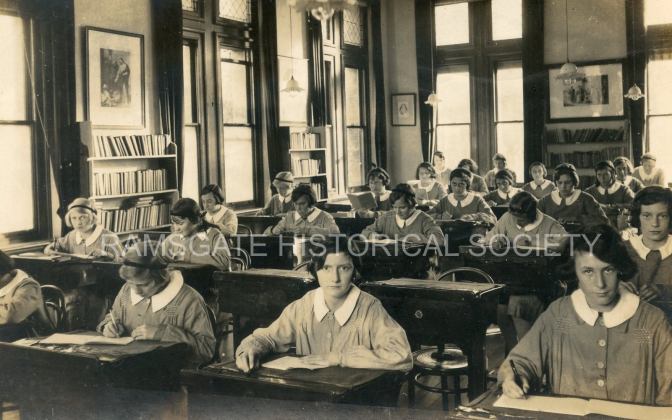
As I walked back to the Pegwell end of the alley, I thought about the layers of time trapped in this secluded place. The convent walls are old enough, but the coppice fencing remains, and I think that’s older still. Covering all of that is modern gauzed-wire. I was reminded of being back in school, when you sat at a very old desk. Perhaps one that dated back to the early 1900s or before; can you remember how those old desks smelled? The scent was best on a hot day; then you got past the dregs of old, reapplied polish and could really smell the wood. In the right light, you could also trace the older signatures, too- the ones carved three or four layers beneath your own. I believe this effect is termed a ‘palimpsest’. Many of the scribbles were from boys who went straight to the war and never came back. I know this because one or two of the names matched those on the memorial boards in the classroom block.
The Convent was also a school; girls came here to study from all over the world, and it remained a college until the 1960s. I’ve read accounts of its former students; some were very happy. Some spoke of the nuns’ cruelty. My nan was convent educated up in London; she confirmed the latter concept to me, many times over.
But the Pegwell Convent no longer exists, no matter how long its walls endure; its nuns are under the ground and so are most of their former students. So, too, are the bluebell plants. But in a few weeks, they’ll rise up and if my memory serves me correctly, many parts of the alley will be blanketed with them. The remaining edgelands of the old coppice will smart at this, I’m sure, and long to return to their former glory.
Maybe one day they will.
Thanks for reading, Gareth Craddock.
PS, I recorded a film of my walk back through the alley. Here it is, in two parts. In total, it’s about eight minutes- just about the time my younger legs took to BMX this distance.
Nota Bene: Both these films seem to start wherever they want. I’m not technical enough to remedy this. If you want to watch each in its entirety, then you’ll need to flick them back to the start, on the bottom left of the video.

 Postcards from the English Outback
I enjoy your blog. Keep writing it. Thanks
LikeLiked by 1 person
Thanks, MM; I appreciate you reading and commenting.
I’ll keep writing for sure,
Happy Easter, Gazza
LikeLike
Happy Easter.
LikeLiked by 1 person
Enjoyed reading ‘The Dark Alley’ and visualising you/the kids and your childhood footsteps around this area. Made me reflect on my own experiences as a child in on the edge of a housing estate (but in Ashford) where alleyways, wooded areas, corn fields were all scary but enjoyed parts of our freedom. Most of it has been built over now with houses. Have passed your alley way many times without noticing it before – I shall put that right very soon. Thanks for the read. 😊
LikeLiked by 1 person
Lovely! Thanks, Britt and nice to talk to a fellow child of Kent.
I hope you enjoy your walk- it’s definitely worthwhile and the bluebells should be out soon.
Yes, the edgelands seem to be where we did a lot of our growing up in earlier times. There was, and is, such a romance to these abandoned reaches. It was well worth rediscovering this one…
Happy Easter,
Gazza
LikeLike
Mad how this takes you back to when you was a child. A great time to be a child in my opinion and living in this area. I lived down Warwick drive from 1984 to about 2000. The endless amount of days we’d play manhunt down the chines. Either that or playing football on the green you mention near to where the nuns graveyard is and the end of Warwick drive. I also remember the smugglers caves we always used to go and investigate on the cliffs. I think we were lucky in the sense that there wasn’t a big difference in ages of children who lived around the area and all lived in close proximity to each other. You wouldn’t really get children from other areas come because of the distance it would’ve been.
LikeLiked by 1 person
Smashing, What a lovely comment JR. A kinsman! Yes, they were halcyon days.
Whenever I’ve written about Pegwell, it always seems to be about the summers. For us, they started when the clocks went forward and ended when they went back. But of course the peak time in our calendar was the school summer break; with each day it lasted, the more native we became- the more ‘Pegwell’…
I’ve written some other entries about Pegwell back then, including one about ‘Reenie’, the old Italian lady who lived opposite me, up on Downs Road; it’s called ‘The Last Princess of Pegwell’. I’ll write something else at some point- and please tell me more of your own Pegwell adventures- I can’t get enough of back then.
God Bless, Gazza
LikeLike
Hi Gareth, yet another beautifully written and quite eerie tale. Certainly brought back memories of my own childhood in the 1950s. We were wild things and got up to all sorts of mischief mainly at an area we called “The Jungle”! Catapults and bows and arrows were our play things and I’m amazed I managed to survive that period relatively unscathed.
Keep writing your tales, I enjoy them immensely!
Best wishes,
Malcolm
LikeLiked by 1 person
Hello Malcolm!
Very nice to hear from you and I hope you’re well. It’s amazing how we keep on seeking those ‘jungles’ out, isn’t it?
All the fishing and wandering we do: I’m sure it’s our way of trying to get back.
I’m currently readying myself for the bass season- I’m going to do my first session late tomorrow afternoon.
I’m glad you enjoyed the eeriness of this one, mate. The alley retains that quality to this day; the poor old coppice didn’t make it though, which is a big part of why I wrote this little account.
Here’s to secret places and never getting old.
Happy Easter, Gazza
LikeLike